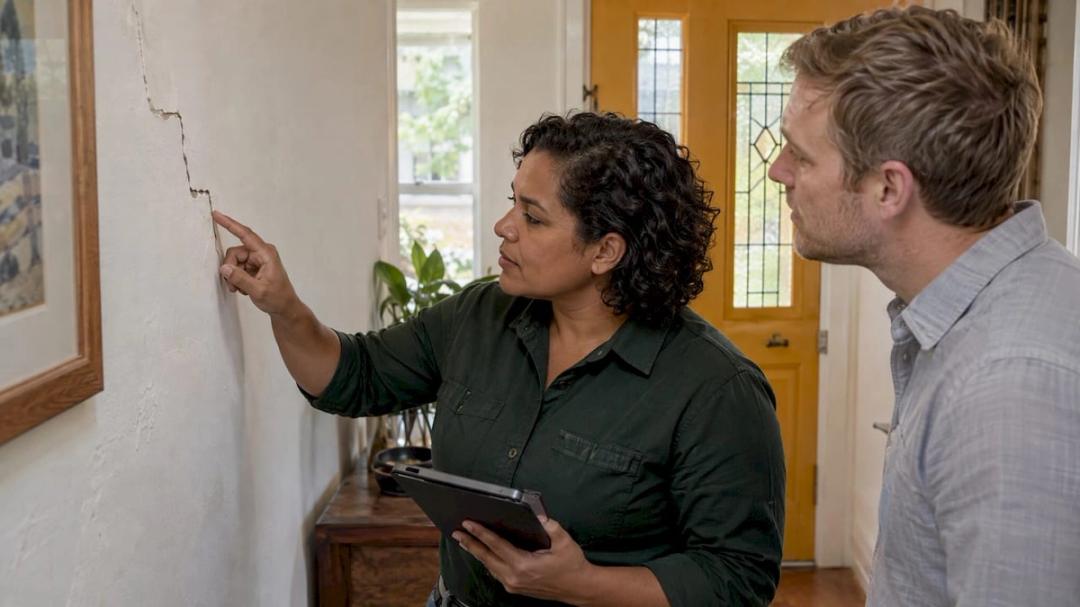

A property tax accountant is a registered tax professional who works on the tax side of owning property: rental deductions, depreciation, capital gains tax (CGT), ownership structures and state taxes. The best time to engage one is before you sign a contract, and the best way to choose is to check their registration, match their experience to your situation and compare a few side by side. On Real Estate Hive you can do that comparison in one place, using tax experts listed across Australia, instead of opening a dozen firm websites.
TL;DR
- A property tax accountant specialises in rental income, deductions, depreciation, CGT and structures such as trusts. A general accountant covers a wider range of work.
- Speak to one before you buy. Ownership, the loan and sale timing all shape the tax result and are hard to change after contracts are signed.
- Anyone who prepares returns or gives tax advice for a fee must be registered with the Tax Practitioners Board (TPB). You can check the public register in a minute.
- Ask about fees, scope and property experience in writing before you start, and compare more than one provider.
- First-time buyers, landlords, owners turning a home into a rental and sellers all have good reasons to get advice early.
Table of Contents
- What a property tax accountant actually does
- When you should talk to one
- Property tax accountant or general accountant: a quick comparison
- How to choose: a practical checklist
- Worked example: why the early conversation matters
- State taxes are part of the picture
- Compare property tax experts on Real Estate Hive
- Questions to ask before you hire
- FAQ
- Sources
What a property tax accountant actually does
The title is not a formal occupation, so the quickest way to understand it is to look at the work. The Australian Bureau of Statistics' occupation standard describes a taxation accountant as someone who analyses, reports on and advises on tax issues, prepares returns and handles disputes with tax authorities. A general accountant, in the same standard, is mainly about compliance-based financial reporting, auditing and accounting systems.
A property tax accountant is a tax accountant who spends most of their time on property. In practice that means:
- Rental income and expenses. Working out what is assessable income, which costs you can claim, and how to split costs when a property is only rented for part of the year or used privately.
- Depreciation and capital works. Claiming the wear and tear on fittings and the cost of building work over several years.
- Capital gains tax. Calculating the gain when you sell, and applying the main residence exemption when a home has been rented out.
- Ownership structure. Advising whether to buy in your own name, jointly, through a trust or through a self-managed super fund (SMSF). Our guide to buying in your own name, a company or a trust covers the basics.
- State taxes. Stamp duty and land tax, which differ by state and territory.
The Australian Taxation Office (ATO) publishes the rulebook for much of this. Its rental properties guide covers assessable rental income, deductible expenses and how to apportion them, records, depreciation, CGT, GST and negative gearing. It is detailed, and applying it to your own purchase, loan and ownership is where an accountant earns their fee.
Accountant, tax agent or tax adviser: does the label matter?
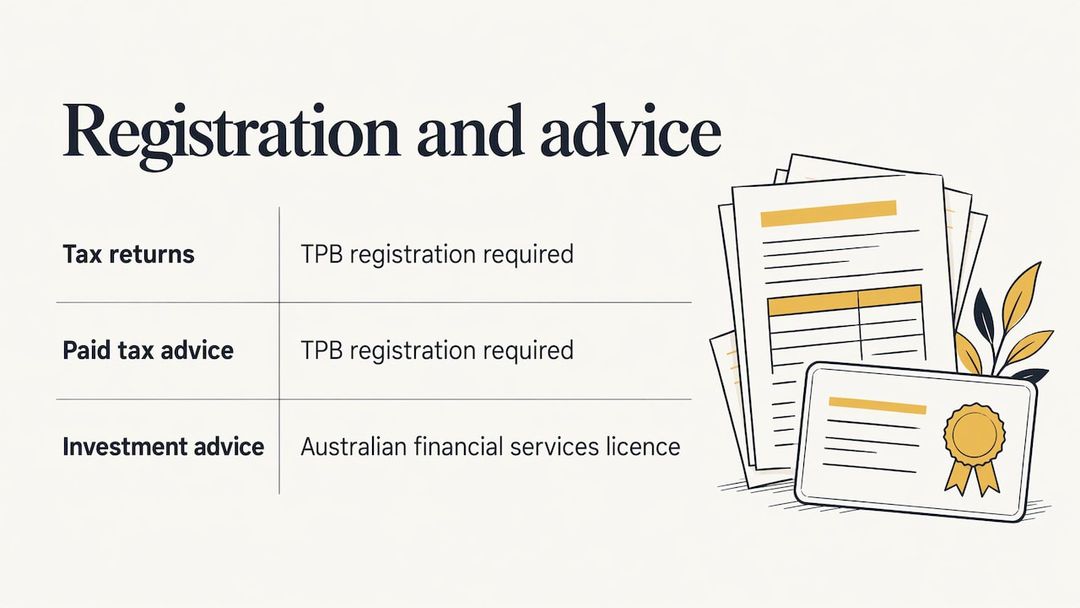
The words overlap, so look at what the person is legally allowed to do rather than what the website calls them. The TPB states that anyone who prepares or lodges tax returns, or gives tax advice for a fee, must be registered with the TPB. A person who keeps your books, or who is a general accountant without registration, may not be allowed to do that. Registration is the test that matters.
Separately, an accountant who gives investment or retirement advice, such as which property or product to buy, needs an Australian financial services licence, according to the same TPB guidance. Tax advice about a property you have chosen is a different service from advice about whether to invest.
When you should talk to one
Most people think of an accountant at tax time. For property, that is usually late. The ATO tells buyers of rental property to keep records from purchase until five years after selling, and says that if you use a tax professional, you should speak to them as early as possible, for example when you first buy, so they can tell you which records you will need.
These are the moments when advice pays off most.
Before you buy your first investment property
The tax result depends on decisions made before settlement: whose name is on the title, how the loan is set up and how long you plan to hold. Changing a poor structure afterwards can be costly or impossible, and a sale or transfer can trigger stamp duty and CGT. If you are still working out the purchase costs, our stamp duty guide for Australian buyers shows how duty is calculated, and the deposit factors for investment properties explain what lenders look at.
When your home becomes a rental, or a rental becomes your home
The main residence exemption can remove CGT on the home you live in. Once you rent the home out, or move into a former rental, how that exemption applies changes. The ATO's property and capital gains tax page covers renting out your home, granny flats, subdividing and the records you need. These are situations where a one-hour conversation before you move can avoid a large surprise at sale.
When you renovate
Homeowners and landlords often ask whether a renovation cost is deductible straight away or has to be claimed over years. The answer depends on whether the work is a repair or an improvement, and the line is easy to cross by accident. A clear, practical explainer from a Adelaide property manager sets out quick tests for capital works versus repairs. Keep invoices and photos from the start, and ask your accountant before you file.
When you buy through a trust or company
Structures add rules. For example, a Victorian law firm's practice guide warns of a recurring problem: people who buy land as a trustee without telling their tax practitioner, so a required notice is never lodged and the state later assesses land tax arrears with penalties. Tell your accountant exactly in what capacity you are buying.
When you are ready to sell, or own several properties
CGT is calculated on sale, but the planning happens before. Timing of the contract, who owns the property and what records you hold all affect the result. Investors with several properties, properties in different states, or a mix of personal and business income benefit most from ongoing advice rather than a once-a-year return.
Property tax accountant or general accountant: a quick comparison
| Question | General accountant | Property tax accountant |
|---|---|---|
| Main focus | Financial reports, business accounts, a range of tax types | Rental income, deductions, depreciation, CGT, ownership structures |
| Best for | A simple return, a business, bookkeeping | Investors, landlords, owners renting out a home, sellers |
| Must be TPB registered to prepare returns? | Yes, to charge for preparing and lodging returns | Yes |
| Useful before you buy? | Sometimes | Usually the most valuable time |
Some general accountants are very capable with property, and some specialist firms are small. The point is to match the person to your circumstances. Moneysmart notes that some accountants specialise in particular areas of tax, so it pays to find one who does what you need.
How to choose: a practical checklist
1. Check the TPB register
Search the practitioner on the TPB Register. It shows whether they are registered and displays any conditions that limit the services they can provide. This takes a minute and applies to everyone, whatever their size.
2. Confirm professional membership
Moneysmart suggests confirming membership of a professional body such as CPA Australia or Chartered Accountants Australia and New Zealand. Membership is not a guarantee of fit, but it shows an accountability framework.
3. Match experience to your situation
Tell them what you are doing: first investment, a second property in another state, a trust purchase, a home-to-rental change, a sale. Ask how many clients they have in the same position and what that work looked like. Moneysmart's suggested questions include what qualifications they hold, what services they provide, how they charge and whether they have experience in your circumstances.
4. Ask what is included
The TPB recommends discussing your financial situation, the details and deadlines of the work, how much it will cost or how fees are structured, where any refund will be sent and how long it will take. Many practitioners provide a letter of engagement setting out both sides' obligations. Ask for one. Clarify whether you are paying for:
- an annual return with rental schedules;
- a depreciation schedule, usually prepared by a quantity surveyor;
- structure advice before purchase, often charged hourly;
- CGT calculations at sale;
- year-round contact, not just a return at the end.
Fees vary by firm, location and complexity, and many accountants charge by the hour for planning and a fixed or "from" price for returns, with extra properties costing more. Request quotes in writing from a few providers so you can compare like with like.
5. Look at how they handle your records
Good records are the foundation of every claim. Ask how you will share bank statements, invoices and loan details, how often you will hear from them, and who to contact when you are considering a purchase, refinance or sale.
6. Watch for warning signs
Be cautious about a practitioner who cannot show TPB registration, who has no property experience, who promises a particular refund before seeing your records, or who is only reachable once a year at lodgement time.
Worked example: why the early conversation matters
Say Priya, a salaried employee in Brisbane, is about to buy her first investment unit for $600,000 with a loan. She plans to hold it long-term and her partner earns less than she does.
If she buys alone and later wants to change the title, a transfer can bring stamp duty and a CGT event. If she talks to an accountant first, they can look at who should own the property given both incomes and goals, what records to start keeping on day one, whether a depreciation schedule is worth ordering, and how the loan structure will affect deductions. The accountant's advice may well be to keep it simple, and that is still worth knowing before settlement rather than after. This example is illustrative only: the right answer depends on your income, loan, state and plans.
State taxes are part of the picture
Stamp duty, land tax and concessions differ between states and territories, and they change with budgets. First-home concessions, foreign-buyer surcharges and land tax thresholds all vary. If you buy in a state you do not live in, or hold property in more than one state, ask your accountant how each state's rules apply to you. Your conveyancer and the relevant state revenue office handle the transaction side, while the accountant looks at the ongoing tax result.
Federal property tax settings are also under active discussion. Rather than relying on an article, ask your accountant how any announced or legislated change to negative gearing or CGT would affect your properties, and check the ATO site for the legislated position at the time you act.
Compare property tax experts on Real Estate Hive
Searching firm by firm is slow, and it is hard to compare what each offers. Real Estate Hive lists tax experts alongside mortgage brokers, buyers agents and other property professionals. You can look at detailed profiles, read reviews, compare providers side by side and see availability updates, then make contact with the ones that suit you. Browsing and comparing is free for buyers, investors and homeowners.

If you are planning a purchase through a self-managed super fund, you can also find SMSF loan specialists on the same site, so your lending and tax conversations can run in parallel. Start at the Real Estate Hive home page and choose the type of professional you need.
Questions to ask before you hire
Take this list to your first call.
- Are you registered with the TPB, and are you a member of a professional body?
- How many clients do you have with a situation like mine?
- What will you do before I buy, and what is charged separately?
- How do you charge: hourly, fixed or a mix? Is there a letter of engagement?
- What records do you need from me, and how do I send them?
- How often will we talk during the year?
- If I buy through a trust, company or SMSF, how does that change your work and fees?
FAQ
What does a property tax accountant do?
They prepare and advise on the tax side of property: rental income and deductions, depreciation, CGT, ownership structures and state taxes. They go beyond filling in a return by helping you plan purchases and sales so that you meet your obligations and claim what you are entitled to.
Is a tax adviser the same as an accountant?
Not necessarily. Titles overlap, so check what the person is registered to do. Anyone who prepares returns or gives tax advice for a fee must be registered with the TPB, and anyone giving investment advice needs an Australian financial services licence.
Do I need a property tax accountant for one rental property?
Not every owner does, but a first investment is when records, repairs versus improvements and structure choices are set. Many first-time investors speak to an accountant before buying so that their first return is right, since early errors can carry forward.
How do I check an accountant or tax agent is registered?
Search the Tax Practitioners Board's public register. It shows whether the practitioner is registered and lists any conditions on their services. You can then confirm membership of a professional body such as CPA Australia or Chartered Accountants Australia and New Zealand.
Are there property taxes in Australia?
There is no single national property tax. Instead, buyers and owners face state stamp duty and land tax, plus federal income tax on rent and CGT on gains. Rules and rates differ by state and territory, and an accountant can explain which apply to you.
Sources
- Finding and using a tax practitioner, Tax Practitioners Board
- Choosing an accountant, Moneysmart
- ANZSCO occupation standard, Australian Bureau of Statistics
- General guidance for rental property owners, Australian Taxation Office
- What to consider before buying a rental property, Australian Taxation Office
- Property and capital gains tax, Australian Taxation Office
- A Guide to Property Taxes in Victoria 2026, LPLC
- Quick ATO tests for capital works vs repairs