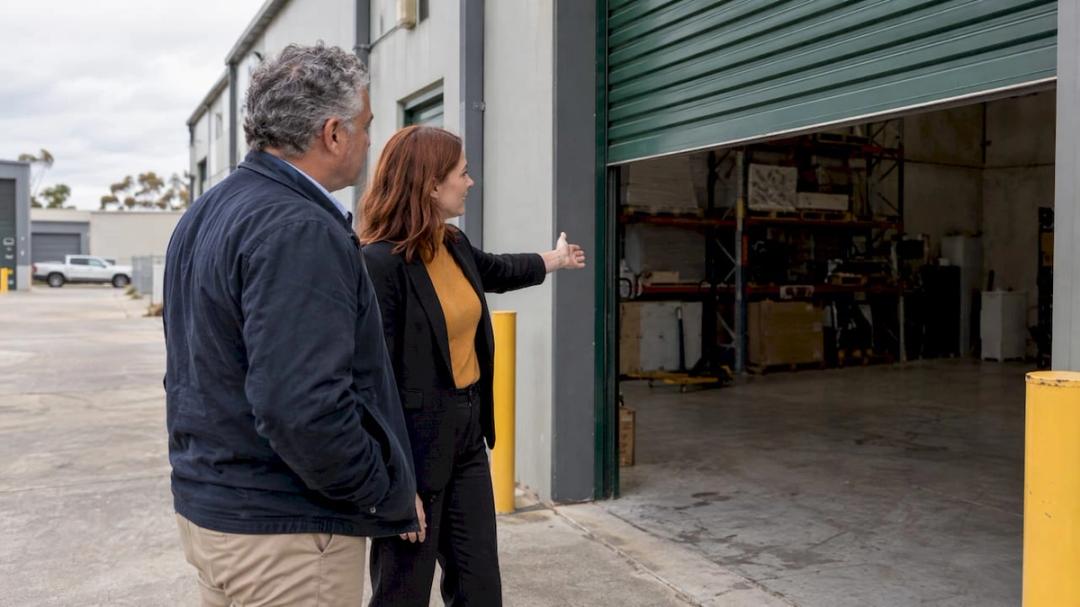
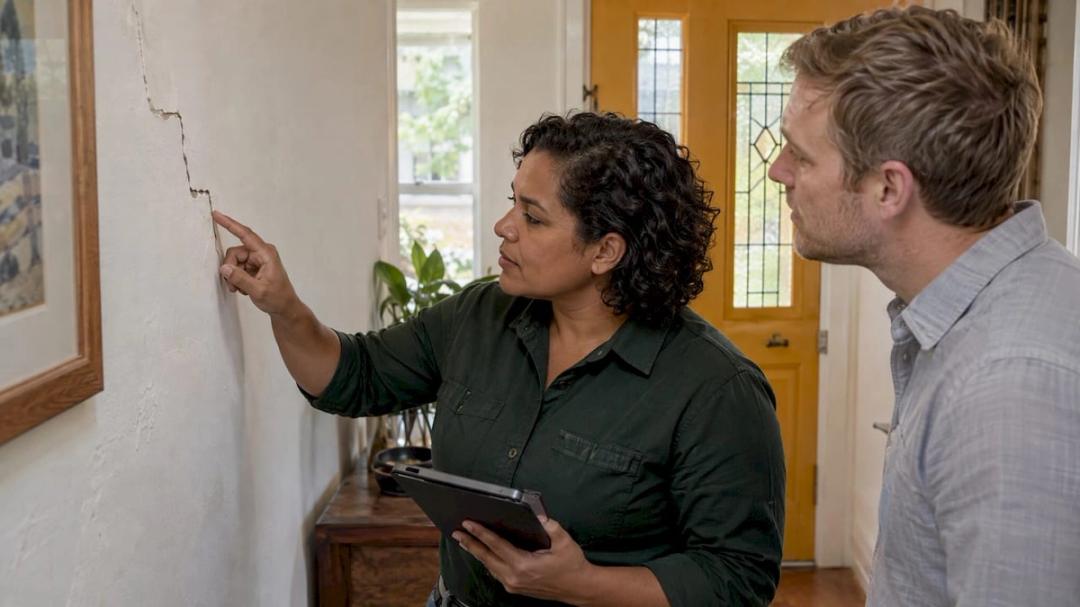
A building defects inspection is an independent inspector's visual check of a home, which records faults such as cracking, damp, roof problems and unsafe work, so you can decide whether to buy, negotiate or walk away before you are committed. In Australia the inspection should happen before you sign, or be written into the contract as a condition. The report is only useful if you know what it covers, which findings are serious and what to do next. This guide covers all three for first-time buyers, investors and owners planning repairs or renovations.
TL;DR
- A building defects inspection records significant visible faults in accessible areas. It is a snapshot, not a warranty against future problems.
- Large cracks, bouncy or sloping floors, fretting mortar, persistent damp and leaking roofs are the findings that most often call for a specialist's opinion.
- Use the report to negotiate price, set contract conditions or plan repairs, and get any agreement in writing.
- In strata, defects in common property are an owners corporation matter, so inspect the common areas and records as well as the lot.
- Builder warranty periods differ by state. In Tasmania, for example, statutory warranties run six years from practical completion.
Table of Contents
- What a building defects inspection actually covers
- The defects that matter most
- What a good report should contain
- How to use the findings
- Buying an apartment: the building is the defect risk
- How long is a builder responsible?
- Finding the right people
- A short checklist before you book
- FAQ
- Sources
What a building defects inspection actually covers
The terms get mixed up. A "pre-purchase building inspection" and a "building defects inspection" are, for most buyers, the same job: a qualified inspector walks the property and writes up what they find. Larger "defect investigations" are a different, more technical service, usually for apartment buildings or new builds with suspected construction faults.
The NSW Government says a standard pre-purchase report records significant defects visible at the time of inspection, including rising damp, wall movement or cracking, safety hazards and faulty roofing. The same guidance says the inspection should cover:
- accessible interiors and exteriors
- the roof space and the roof exterior
- the under-floor space
- site features such as drainage, paths, driveways and small retaining walls
The key words are "visible" and "accessible". An inspector does not cut into walls, move heavy furniture or crawl into a space that is unsafe to enter. If an area cannot be reached, the report should say so and say why. That matters because a blocked-off subfloor or a roof space that cannot be entered is exactly where costly problems hide.
The Queensland Building and Construction Commission makes the limit plain: a pre-purchase inspection identifies obvious defects or concerns but is not a warranty against future defects. Treat the report as a well-informed snapshot of one day.
Inspection or pest check: you usually need both
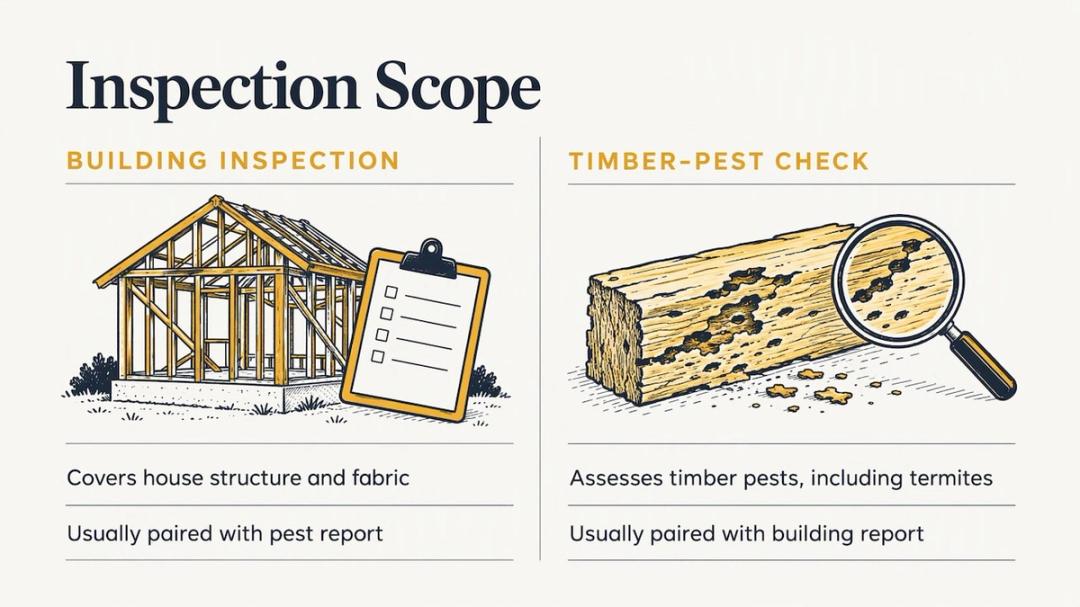
Building inspections focus on the structure and fabric of the house. Timber pests such as termites are normally assessed separately. Our guide to pest inspection services for Australian home buyers explains what that report covers and why it sits alongside the building report.
The defects that matter most
Not every item in a report deserves the same weight. Peeling paint is a maintenance job. A sagging roofline is a negotiation, or a reason to leave.
Consumer Affairs Victoria lists these as warning signs to look for when inspecting a property:
- sloping or bouncy floors
- damp brickwork
- cracked walls
- mould
- lifting tiles
- peeling paint
- water pooling in wet areas
- fretting mortar (mortar between bricks that is crumbling away)
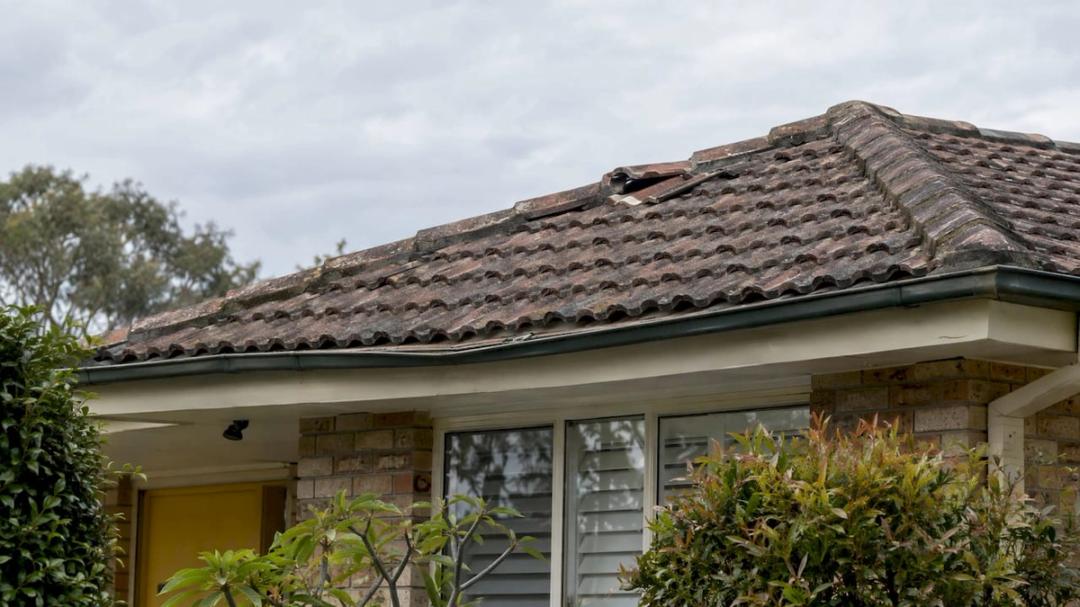
- sagging roofs and damaged roof tiles
The Queensland Building and Construction Commission's list overlaps and adds leaking ceilings, damaged foundations, inadequate waterproofing and drainage issues.
A simple way to rank what you find
Use three buckets when you read a report.
| Bucket | Typical examples | What it usually means for you |
|---|---|---|
| Structural or safety | Large cracks, fretting mortar, bouncy or sloping floors, damaged foundations, unsafe or unauthorised work | Get a specialist opinion before you proceed |
| Water and moisture | Leaking roof or ceiling, damp brickwork, wet-area waterproofing failure, drainage problems, mould | Find the source and get a repair quote before you commit |
| Maintenance | Peeling paint, lifting tiles, worn fittings | Budget for it and use it in negotiation |
Consumer Affairs Victoria advises that large cracks warrant advice from a structural engineer and that fretting mortar may point to major structural problems. A structural engineer is a licensed professional who assesses whether a building's frame and footings are sound. This is the point at which a general inspector's job ends and a specialist's begins.
Wet areas and roofs
Water is behind a large share of defect claims, and it is often invisible until damage has spread. A shower with a failing base can leak into the wall or slab for months. If a report flags a wet area, a practical way to understand the problem is to read how two tests can find a leaking shower base, then ask the inspector or a licensed plumber what they would check in that bathroom.
On roofs, stained ceilings, displaced tiles and sagging lines are the signs to look for. The Queensland guidance suggests buyers obtain a separate specialist report for a concern such as a roof, rather than relying on a general inspection alone.
For a wider checklist of what shows up before a sale, see our pages on signs your home needs a professional's attention and hidden maintenance issues that can delay a property sale.
What a good report should contain
A two-line summary and a page of photos is not enough. The NSW Government says a report should state:
- the scope of the inspection
- the date
- the property and client details
- any areas that were inaccessible, and the reasons
- the overall condition of the building
- major faults
- significant repairs needed
WA Consumer Protection adds that reports should identify faults, say whether repair is possible, and flag unsafe or unauthorised renovations or extensions. Unauthorised work is a big one. A deck, extension or conversion built without approval can become your problem the day you buy.
When the inspector should refer you on
The NSW guidance says inspectors should recommend suitably accredited specialists when further assessment is needed, naming structural and geotechnical engineers, surveyors and relevant utilities as possible referrals. A geotechnical engineer assesses soil and ground conditions, which matters for slab movement and sloping sites. If your report says "recommend further investigation" on a major item, do not treat that as boilerplate. Get the specialist's view before your cooling-off period or finance and inspection conditions run out.
Attend the inspection
The Queensland guidance advises buyers to attend, understand the scope, and ask questions. Being on site is the quickest way to learn the difference between a cosmetic crack and a movement crack, and to see for yourself what could not be accessed. Take photos and ask the inspector to show you the roof space and subfloor findings.
How to use the findings
The report only earns its fee if it changes a decision or a price. Consumer Affairs Victoria recommends getting an independent professional report before signing and says buyers can use the findings to negotiate the price or the contract conditions, or to develop a maintenance program.
A worked example
Say a report on a house you want to buy lists three items: a leaking section of roof, a hairline crack above a door and lifting bathroom tiles.
- The roof is a water problem, so you get a roofer's quote for the repair.
- The hairline crack is monitored, and you ask the inspector whether it looks like normal settlement or movement.
- The tiles are a maintenance item, and you add them to your budget.
You then go back to the seller with the roof quote and ask for a price reduction or a repair before settlement. Nothing here is guaranteed, because the seller can say no. But you are negotiating with a written quote, not a feeling.
Put it in writing
WA Consumer Protection recommends a satisfactory-inspection condition in the sale contract and says any negotiation or agreement after the inspection should be recorded in writing, including who repairs what and by when. A verbal "we'll sort the roof" is worth nothing at settlement. Ask your conveyancer or solicitor to check the wording of the condition before you sign.
Agents also walk through homes with defects in mind before listing. It helps to understand what real estate agents look for in an inspection, because it shows you which issues sellers tend to fix before listing and which they leave for you.
Buying an apartment: the building is the defect risk
In a strata property, your lot is only part of what you are buying. Strata lot owners are automatically members of the owners corporation (called a body corporate in some states), and share responsibility for maintaining and repairing common property, according to housing researchers writing in The Conversation.
That has a practical consequence. ABC News reported in 2025 that in NSW an individual apartment owner cannot bring a major-defect claim against the developer or builder for common property, and that the owners corporation must take the legal action. Defects in the roof, façade, waterproofing or fire systems are therefore a shared cost and a slow process.
Before you buy an apartment:
- Commission an inspection that covers common areas, not only the lot.
- Read the strata records for repair history, special levies and any defect disputes.
- Ask what the sinking or capital works fund looks like against the age of the building.
Our guide to the strata inspection report and how to read it walks through what the strata documents tell you.
How long is a builder responsible?
The answer depends on your state or territory, so check your own regulator's page. As one example, the Tasmanian Government's July 2024 consumer guide says statutory warranties cover suitable materials, compliance with the law including the National Construction Code, skilful work and reasonable diligence, and last six years from practical completion (the point at which the work is finished apart from minor items).
The same guide says agreed minor handover defects should be documented, and the contractor must fix them as soon as possible, no later than six months after the owner receives the defects document. Other states set different periods and complaint pathways, so do not assume the Tasmanian figures apply to you.
The lesson for owners is practical: keep the contract, variations, certificates and photos, and report defects in writing as soon as you spot them.
The building code
New work is measured against the National Construction Code. The Australian Building Codes Board released NCC 2025 on 1 May 2026, and states and territories can adopt it from that date, subject to their own implementation arrangements. Adoption timing differs by jurisdiction, so the edition that applies to a particular build depends on where and when it was approved. If you are checking a newer build, ask the builder or certifier which edition the approval was assessed against.
Finding the right people
A defects inspection leads to other decisions, and each is better made with a comparison in front of you rather than a single quote.
- Repairs and renovation. If your report lists work that needs doing, compare licensed professionals on our builders directory, with detailed profiles and reviews side by side.
- Negotiating and buying. If inspections are uncovering problems across several shortlisted homes, a buyers agent can handle the negotiation. You can compare them in Sydney, Melbourne and Adelaide, or browse all buyers agents.
- Finance. A repair bill changes what you can borrow and what you need, so talk to a mortgage broker before you commit to a property that needs work.
Real Estate Hive is a property services directory for Australia. It lets you compare real estate agents, buyers agents, mortgage brokers, tax experts, builders and bushfire consultants side by side, with profiles, reviews and real-time updates, so you are not searching across multiple sites in the middle of a contract period.

If the property is in a bushfire-prone area, your report may not cover that risk at all. Our page on a bush fire assessment report explains what one involves for a dual occupancy or subdivision, and you can start at the Real Estate Hive homepage to find a bushfire consultant.
A short checklist before you book
- Confirm the inspector is qualified and licensed or registered where your state requires it.
- Agree the scope in writing: building only, or building and pest, and whether common areas are included for strata.
- Ask what will be inaccessible and whether that can be fixed before the inspection.
- Attend the inspection.
- Read the report against the three buckets: structural, water, maintenance.
- Get specialist reports for anything the inspector refers on.
- Convert findings into quotes, then into a negotiation or a decision.
- Record the agreement in writing before you exchange or settle.
Owners who are not buying can use the same logic. An annual look at essential home systems catches small problems while they are still cheap.
FAQ
What fails a building inspection?
A building inspection is not pass or fail. The report records faults, and you decide what they mean. Structural movement, damaged foundations, leaking roofs, serious damp and unauthorised work are the findings most likely to change a buying decision.
Does an inspection find every defect?
No. It covers what is visible and accessible on the day, and the report should list areas that could not be reached. The Queensland Building and Construction Commission notes it is not a warranty against future defects.
Should I still inspect a new build?
Yes. New homes can have defects too, and statutory warranties exist because faults appear after handover. Document anything you find in writing and check the warranty period with your state regulator.
Who pays for defects in common property in an apartment?
The owners corporation is responsible for common property, so the cost is shared among lot owners. In NSW, major-defect claims over common property must be brought by the owners corporation, not an individual owner.
Sources
- NSW Government: Pre-purchase inspection reports when buying a home
- Queensland Building and Construction Commission: Before you buy and sell
- Consumer Affairs Victoria: Inspect properties before you buy
- WA Consumer Protection: Property inspections
- The Conversation: Dealing with apartment defects
- ABC News: Leaking ceilings, a private eye and dead pigeons
- Tasmanian Government: Residential Building Consumer Guide, July 2024
- ABCB: NCC 2025 released
- Two tests that find a leaking shower base